
By Mike Switzer, Product Line Manager - Motors
When it comes to pumping systems, especially in industrial and municipal settings, the choice of motor is more than just a technical detail, it’s a critical design decision. Vertical motors play a unique and indispensable role in driving pumps for applications such as water treatment, power generation, and oil & gas. But why are they so important, and what makes them different from their horizontal counterparts?
The Unique Role of Vertical Motors
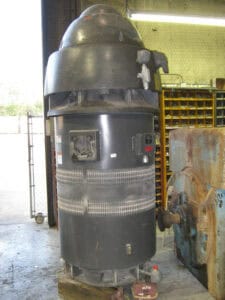
Vertical motors are specifically manufactured to directly drive vertical pump shafts. Unlike horizontal motors, which deliver power through couplings at roughly the same level (side-by-side arrangement), vertical motors are mounted directly on top of the pump, with the motor shaft aligned vertically above the pump shaft. This configuration offers several advantages:
- Space Saving Design: Vertical motors save floor space, making them ideal for pump stations with limited real estate.
- Direct-Coupled Drive: They eliminate the need for additional gearboxes or complex couplings, reducing mechanical losses.
- Alignment Reliability: Gravity helps maintain shaft alignment, which is critical for long pump shafts.
Key Design Considerations
Vertical motors aren’t simply horizontal motors turned upright. Their construction reflects the unique mechanical demands of vertical pump applications, particularly when it comes to axial thrust, bearing arrangements, cooling, and structural rigidity. Understanding these design considerations is important when selecting a motor that will provide reliable performance over the life of the pumping system.
Thrust Bearings
One of the most important components in a vertical motor is the thrust bearing. In many vertical pump applications, the pump generates a significant axial load that must be supported by the motor. This is especially important in deep-well, vertical turbine, and high-flow pumping systems, where the combined forces acting along the shaft can be substantial.
To accommodate these loads, vertical motors are typically designed with heavy-duty thrust bearings capable of supporting the axial forces generated by the pump. The thrust bearing is commonly located at the opposite drive end, or top, of the motor. This arrangement allows the lower guide bearing to primarily support and stabilize the rotating shaft without carrying the primary axial load.
Separating these functions is an important part of vertical motor design. The thrust bearing controls axial shaft movement while the guide bearing helps maintain proper shaft alignment and smooth rotation. During operation, some axial movement can still occur as components expand from normal thermal growth, but the bearing system is designed to accommodate these operating conditions while maintaining proper alignment.
The required thrust-bearing capacity should always be considered when specifying a vertical motor. Selecting a motor without sufficient thrust capacity can shorten bearing life and potentially affect the reliability of both the motor and the driven pump.
Frame Size and Construction
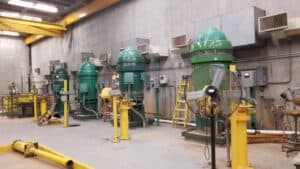
Frame size is another important consideration, particularly for larger vertical motors used in demanding pumping applications. Large frames, such as the 5008VP frame, are designed to provide the structural strength required to support larger horsepower ratings, heavier rotating components, and the mechanical forces associated with the pump.
A rigid motor structure helps maintain shaft and bearing alignment while reducing the effects of vibration. This becomes increasingly important as motor size, pump depth, and operating loads increase. Even relatively small alignment issues can contribute to increased vibration, bearing wear, and other mechanical problems over time.
Large vertical motor frames are also designed with serviceability in mind. Accessible bearing and lubrication systems can make routine maintenance easier and help technicians properly inspect and maintain critical components. For facilities where motors are expected to operate continuously, these seemingly small design details can make a meaningful difference in long-term reliability and maintenance requirements.
Cooling and Ventilation
Heat management is critical to the life of any electric motor, and vertical motors present their own cooling challenges. Depending on the installation, a vertical motor may operate outdoors, inside a pump station, or in an area where surrounding equipment limits natural airflow.
Many vertical motor designs use top-mounted fans and ventilation paths that move cooling air across and through the motor. Proper airflow helps remove the heat generated by electrical and mechanical losses and keeps internal components within their intended operating temperature range.
The motor enclosure is equally important. Motors installed outdoors or in harsh industrial environments may require weather-protected or other application-specific enclosures to limit exposure to rain, debris, and contaminants while still providing adequate ventilation.
When selecting a vertical motor, cooling should therefore be evaluated as part of the complete installation rather than as a motor specification alone. Ambient temperature, elevation, enclosure type, airflow restrictions, and surrounding equipment can all influence how effectively the motor dissipates heat.
Applications Where Vertical Motors Shine
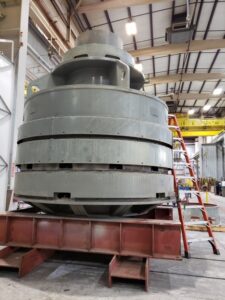
Vertical motors are most commonly associated with pumping systems where the physical arrangement of the pump, shaft, and motor makes a vertical configuration advantageous. Their ability to accommodate axial thrust while maintaining a relatively compact footprint makes them well suited for several demanding industries.
Municipal water and wastewater systems are among the most common applications. Vertical motors are frequently paired with vertical turbine pumps used to move water from wells, reservoirs, treatment facilities, and other water sources. These systems may operate for extended periods, making motor reliability and proper thrust-bearing selection especially important.
Power generation facilities also rely on large vertical motors for applications such as circulating and cooling water pumps. These systems can move enormous volumes of water and often play a critical role in plant operation. The motors must be capable of handling continuous duty, substantial pump loads, and demanding environmental conditions.
Oil and gas facilities use vertical motors for a variety of pumping duties, including process water, cooling water, and certain petroleum-handling applications. Refineries and processing facilities often have limited available space and demanding reliability requirements, both of which can make vertical motor and pump arrangements an attractive solution.
Vertical motors can also be found in irrigation, flood control, industrial water treatment, and other applications where large volumes of liquid must be moved efficiently.
Why Choose Vertical Over Horizontal?
Horizontal motors remain the standard choice for many industrial applications, but certain pumping systems are better suited to a vertical configuration. The decision ultimately depends on the pump design, available space, thrust requirements, and overall system arrangement.
One of the biggest advantages of a vertical motor is its ability to work directly with long vertical pump shafts. In applications such as vertical turbine pumps, the motor can be mounted directly above the pump and aligned with the pump shaft. This creates a straightforward mechanical arrangement without requiring the additional footprint associated with many horizontal configurations.
Space can be another major consideration. Because the motor is positioned above the pump rather than beside it, a vertical arrangement can significantly reduce the floor space required for the equipment. This can be valuable in pump stations and industrial facilities where available space is limited.
Perhaps most importantly, vertical motors can be designed specifically to handle the axial thrust generated by the pump. Standard horizontal motor bearing arrangements may not be intended to support the same level or direction of axial loading. A properly specified vertical motor incorporates a thrust-bearing system designed around these forces.
For applications involving long pump shafts, limited floor space, or substantial axial thrust, a purpose-built vertical motor offers more than a convenient mounting arrangement. Its bearings, frame, cooling system, and overall construction are engineered around the demands of the vertical pumping system. Choosing the right design and properly matching its thrust capacity and other characteristics to the pump is an important step toward achieving reliable, long-term operation.
Final Thoughts
Vertical motors are more than a specialized solution. They’re a critical component in many of the pumping systems that keep industrial and municipal operations running. From managing substantial axial thrust loads to providing the structural support required for large vertical pumps, these motors are purpose-built for applications where a standard horizontal motor may not be the right fit.
Understanding key factors such as thrust-bearing capacity, frame construction, cooling, and the demands of the driven equipment can make a significant difference when selecting a vertical motor. Properly matching the motor to the pump and operating conditions not only improves performance but can also help reduce premature bearing wear, minimize downtime, and extend the overall life of the equipment.
Ultimately, reliable operation starts with selecting the right motor for the application. When the demands of the pumping system call for a vertical design, understanding what sets these motors apart is the first step toward making the right choice.
Your motors are critical to your operation. The people behind them should be, too. Explore our motor industry capabilities and see how we can support your operation.