
By Jeremy Mitchell, Field Service Proposal Solution Specialist
Transformer oil does a lot more than just sit quietly inside the tank. It is constantly working, insulating energized components, carrying heat away from internal parts, and playing a major role in how long your transformer operates reliably. But like anything that works hard, oil changes over time. Heat, oxygen, and moisture slowly alter its chemistry. Oxidation begins. Acids form. Contaminants build up. Left unchecked, these changes speed up insulation aging and quietly reduce transformer life. The good news is that you do not have to let that happen. One of the most proven and effective ways to preserve oil quality and extend transformer life is proper oil processing. Among available methods, Fuller’s earth treatment has stood the test of time.
What is Fuller’s Earth?

Despite the name, it is not soil from your backyard. Fuller’s earth gets its name from textile workers called “fullers,” who once used it to remove oils and impurities from wool. Today, it is a naturally occurring clay-like material made primarily of magnesium-aluminum silicates. What makes it so effective? Surface area. Fuller’s earth has an incredibly fine structure with a high surface area that allows it to adsorb, not absorb, polar contaminants like acids and oxidation byproducts. In transformer oil applications, that means it pulls out the very compounds responsible for chemical instability and long-term degradation. Think of it as a reset button for aging oil.
Why is Processing Your Oil Important?
As transformer oil oxidizes, it forms polar compounds such as organic acids and sludge precursors that gradually degrade performance. One of the earliest warning signs is a drop in interfacial tension, or IFT. IFT measures how strongly oil resists mixing with water. Clean oil has higher IFT. As oxidation byproducts accumulate, IFT drops.
When IFT decreases, it signals:
- More polar contaminants in the oil
- Increased moisture solubility
- Higher risk to paper and pressboard insulation
Moisture is no small issue. It migrates into solid insulation, reduces dielectric strength, and accelerates aging. Meanwhile, acids can corrode internal metal components, increase resistance, and contribute to long-term deterioration. Yes, transformer oil can be replaced, but full replacement is rarely as simple as it sounds. It is expensive, difficult to remove every trace of degraded oil, and often unnecessary. In many cases, reclaiming and restoring the existing oil is the smarter and more economical solution.
How Is Fuller’s Earth Applied in Transformer Oil Filtration?
 The process is methodical and highly effective.
Step 1: Dehydration
Before earth processing begins, the oil is dehydrated to remove free and dissolved moisture. This allows the Fuller’s earth to focus on chemical contaminants rather than water.
Step 2: Earth Processing
The oil is circulated through vertical towers filled with Fuller’s earth under controlled flow rates. As the oil moves through the media, acids and oxidation byproducts are chemically adsorbed onto the earth. Unlike mechanical filtration, which removes solid particles, Fuller’s earth removes the dissolved polar compounds responsible for degradation.
Step 3: Monitoring
Oil samples are tested throughout the process. Rising IFT and a lower acid number confirm successful treatment. Most processing rigs use dual towers, with one operating while the other is reloaded, so work can continue efficiently.
Step 4: Re-Inhibition
An important detail is that Fuller’s earth removes harmful oxidation products and beneficial inhibitors. After processing, inhibitors are added back to meet IEEE standards and ensure long-term protection. When complete, oil properties often return close to near-new condition. IFT improves. Acid levels drop. Dielectric strength stabilizes. Even the oil’s appearance often improves significantly.
Safety, Storage, and Disposal
Unused Fuller’s earth is non-hazardous and stored in sealed containers away from moisture. During operation, earth towers remain sealed or under vacuum to prevent moisture absorption.
Spent earth is generally not classified as hazardous unless PCB contamination is present. If PCBs are detected, disposal must follow applicable regulations. Otherwise, used material is typically handled at approved landfill facilities designated for oil-contaminated waste.
Real-World Impact
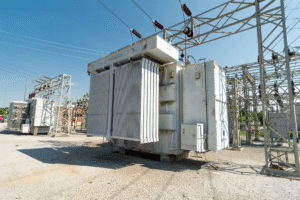
This is not just theory. In one of our recent projects with a large power provider, a severely neglected transformer was nearing the point of replacement, an expense that would have reached several million dollars. Instead, the oil was reclaimed using Fuller’s earth processing and properly reinhibited. The result was a transformer restored to reliable operating condition, avoiding replacement costs and long equipment lead times. Performance improvement was visible immediately.
Conclusion
Transformer oil is not just a fluid. It is a critical asset inside your equipment. When it begins to degrade, you have options. Fuller’s earth processing is a proven and economical way to restore oil chemistry, protect insulation, and extend transformer life, often saving significant capital costs in the process. A little chemistry can go a long way.
At Southwest Electric Co., oil reclamation is not just a service we offer. It is part of a comprehensive approach to transformer life extension. Our team provides on-site oil processing, dehydration, Fuller’s earth treatment, testing, and reinhibition to help utilities and industrial facilities protect their most valuable assets. Whether you are addressing declining oil quality or planning proactive maintenance, we have the equipment, experience, and field expertise to support you.
If you would like to evaluate your transformer oil condition or discuss a reclamation project, Southwest Electric Co. is ready to help!